Why, How, and Wow! Space
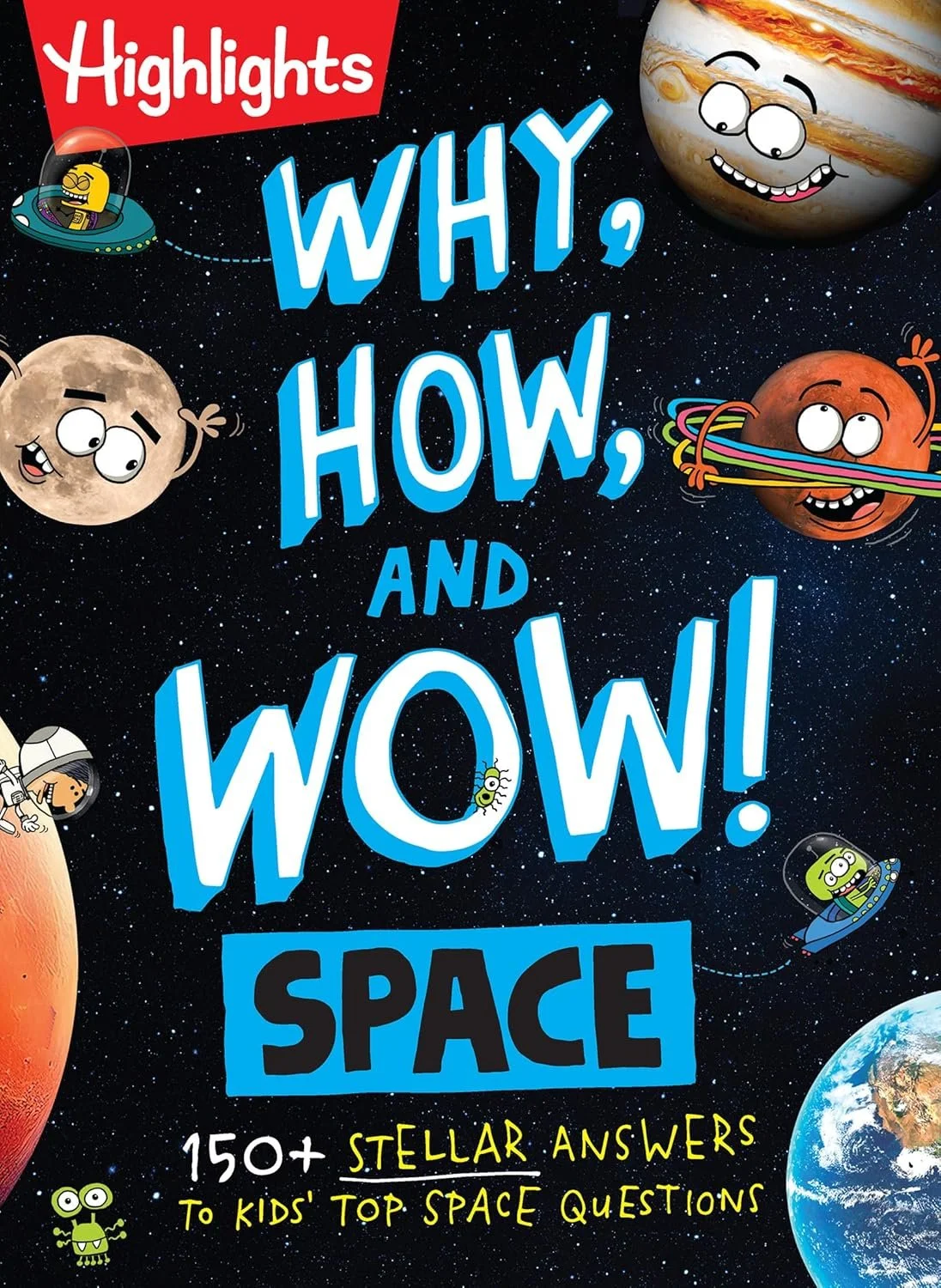
Helping Kids Think Like Scientists: A Classroom Experience Inspired by Why, How, and Wow! Space
Have you ever noticed how naturally curious kids are about space?
They ask big questions.
They imagine the impossible.
They wonder about everything.
And yet… sometimes traditional instruction gives them answers before they’ve had a chance to truly explore the questions.
That’s exactly what Why, How, and Wow! Space does differently.
It invites students into curiosity first.
Book Snapshot
Title:Why, How, and Wow! Space
Author: Stephanie Warren Dimmer
Illustrator: Andrew Brisman (note: cover also credits Jim Bradshaw in guide)
Publisher: Highlights Press
Age Range: 7+
Genre: Nonfiction / Informational Text
Themes: Space Science, Inquiry-Based Learning, Curiosity, Scientific Thinking, STEM Exploration
A Curiosity-Driven Approach to Learning Science
This isn’t your typical space book.
It doesn’t just present facts—it builds understanding through questions.
Using a kid-centered Q&A format and real insights from NASA scientists, the book explores everything from:
The Sun and Moon
Planets and space exploration
Black holes and strange space phenomena
Life beyond Earth
Every page invites students to ask:
👉 Why does this happen?
👉 How do we know this?
👉 What else could be out there?
It transforms science from something to memorize…
into something to investigate.
Why This Book Matters (Especially Right Now)
If you’ve ever struggled with:
Getting students to ask meaningful questions
Moving beyond surface-level nonfiction reading
Teaching science as a process—not just content
Engaging reluctant learners in STEM
…this book is a game-changer.
It meets students where they are—curious—and takes them further.
What Students Learn (Without Even Realizing It)
Through this book and the companion guide, students naturally begin to:
Think like scientists
Ask and refine questions
Build evidence-based explanations
Strengthen critical thinking and reasoning
Develop curiosity and scientific identity
As highlighted in the guide, students move from “learning about science” to actually doing science
Bringing the Book to Life in Your Classroom
To extend this experience, I created a Discussion & Project Guide that transforms reading into full-scale inquiry.
Inside, you’ll find:
Chapter-by-chapter discussion questions rooted in real science thinking
Vocabulary and extension activities across STEM, writing, and art
A six-step inquiry project modeled after real scientific processes
Reflection opportunities that build metacognition and curiosity
The My Big Space Question Project is the heart of the experience, guiding students through:
Asking a question
Making a prediction
Investigating using evidence
Analyzing findings
Explaining the science
Reflecting on the “wow”
This mirrors authentic scientific workflows and encourages deep thinking
A Simple Way to Use This in Your Week
Here’s an easy classroom rhythm:
Day 1: Read + generate “Big Space Questions”
Day 2: Begin inquiry (prediction + research)
Day 3: Continue investigation + record findings
Day 4: Analyze + build explanations
Day 5: Present + reflect on discoveries
Simple. Structured. Powerful.
Standards Alignment
This lesson naturally supports:
Common Core State Standards (CCSS):
Informational text comprehension
Evidence-based discussion and writing
Research and explanatory writing
Next Generation Science Standards (NGSS):
Asking questions and defining problems
Developing and using models
Constructing explanations based on evidence
Understanding space systems and phenomena
Social-Emotional Learning (SEL):
Curiosity and self-awareness
Persistence through problem-solving
Reflective thinking
Confidence in idea-sharing
(As detailed in the guide’s standards alignment section)
Grab the Free Discussion & Project Guide
If you’re ready to turn curiosity into real learning, you can download the full guide here:
👉 Download the Why, How, and Wow! Space Guide
Want to Add the Book to Your Collection?
👉 Purchase Why, How, and Wow! Space here
Note: As an Amazon Associates I earn from qualifying purchases.
A Final Thought
What I love most about this book…
…is that it doesn’t rush students to answers.
It gives them space to wonder.
To question.
To think.
And in that space…
something powerful happens.
They begin to see themselves as scientists.
This guide is part of my Guides by Deb collection—standards-aligned resources designed to help educators turn great books into meaningful learning experiences.
I’m Debbie Gonzales, author, educator, and founder of Pin Lit Marketing, where I help children’s book creators grow their visibility through Pinterest.
Together, this work connects books, educators, and readers in lasting ways.