
Practical tools to support stories beyond the page
Educational Resources
This space brings together the tools, insights, and educational materials that support long-term visibility for meaningful work. From strategy workbooks and classroom-ready teacher guides to essays, workshops, and speaking engagements, each resource is created with care and intention. Together, they’re designed to help stories remain discoverable, relevant, and well supported over time.

Featured Educator Guides
-
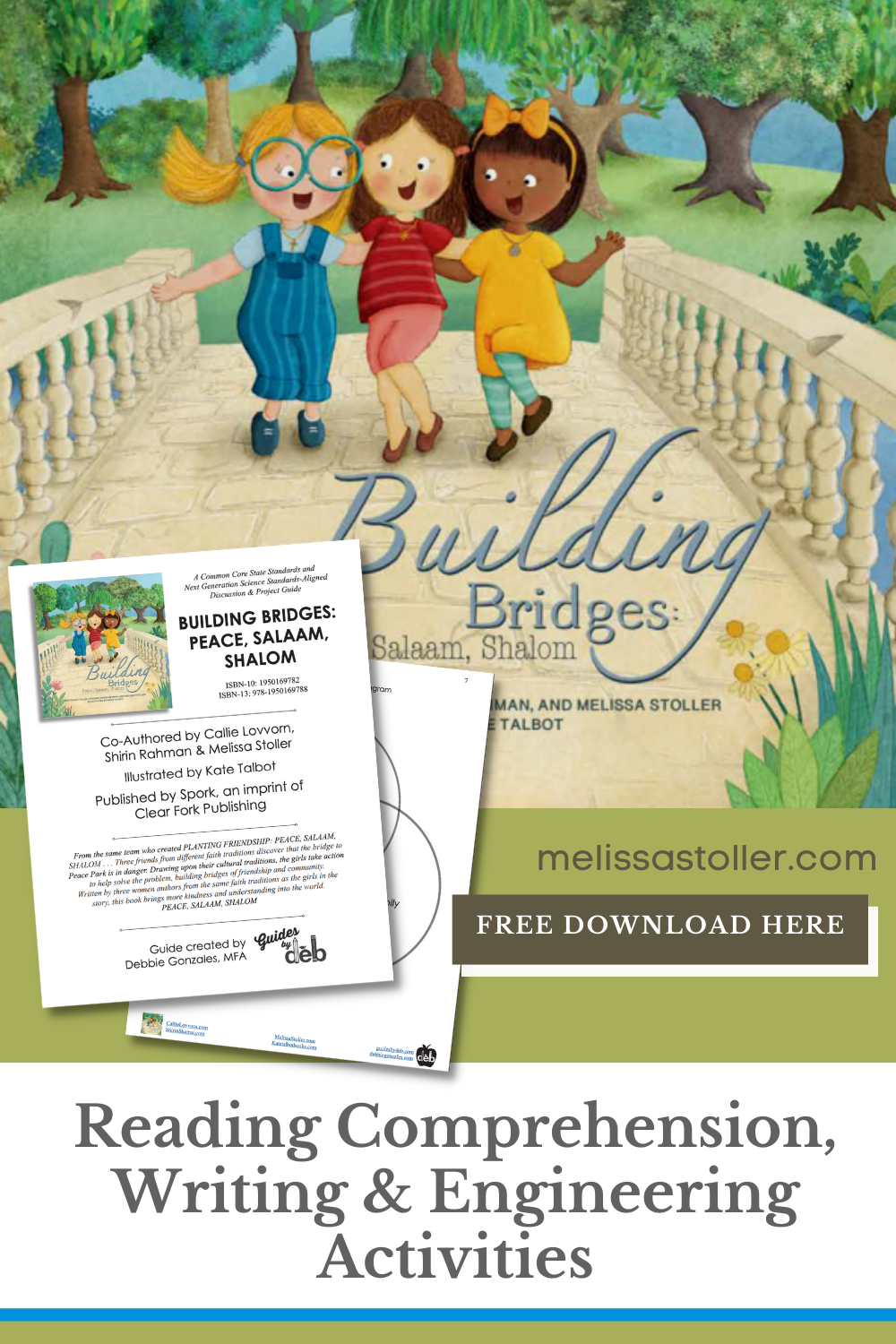
Building Bridges: Peace, Salaam, Shalom offers a thoughtful, values-centered approach to literacy instruction by inviting students to explore kindness, empathy, and community through story. The guide emphasizes interfaith understanding by respectfully introducing Christianity, Judaism, and Islam through the lived experiences of child characters, helping students appreciate cultural differences while recognizing shared values. Through guided discussion, character analysis, and reflective writing, students examine themes of friendship, inclusion, cooperation, and civic responsibility, reinforcing social-emotional learning skills such as perspective-taking, problem-solving, and community awareness. Symbolism plays a central role as students explore both literal and figurative meanings of bridges—representing connection, unity, and peace.
-
This standards-aligned guide integrates English Language Arts, Social Studies, and STEM learning in meaningful, hands-on ways. Students engage in reading comprehension, character comparison, theme analysis, written reflection, and collaborative discussion aligned with Common Core State Anchor Standards for Reading, Writing, and Speaking & Listening. Engineering concepts are introduced through an accessible NGSS-aligned bridge study, allowing students to identify and compare beam, arch, and suspension bridges while learning how structure supports function. Project-based activities—including foldables, sorting tasks, illustration work, and symbolic craft-making—support multiple learning styles
-
The guide is best suited for grades 2–4, with flexibility for use in grade 1 through teacher-led instruction and enrichment opportunities for upper elementary learners.oes here
-
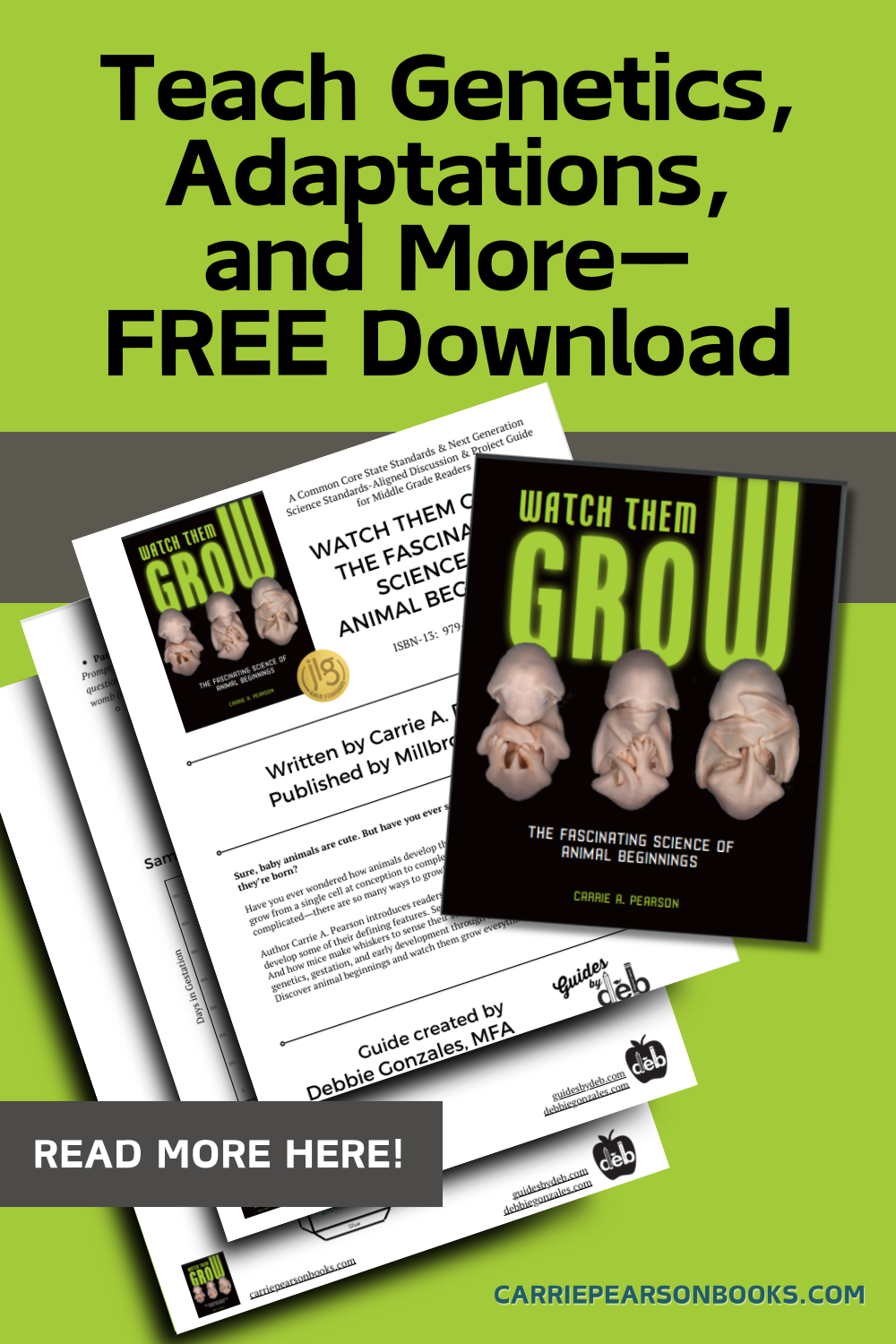
Watch Them Grow: The Fascinating Science of Animal Beginnings invites students to explore life science through curiosity, inquiry, and wonder. The guide emphasizes scientific thinking by encouraging readers to ask questions, analyze patterns, and reflect on how animals develop the traits they need to survive. Through chapter-based discussions, students examine genetics, gestation, adaptation, and variation while drawing meaningful connections between animal development and their own growth. The guide thoughtfully reinforces the idea that there is no single “right” way to grow, highlighting diversity in life strategies across species and fostering respect for difference, adaptability, and resilience. Reflection prompts woven throughout support critical thinking, metacognition, and a deeper understanding of how science explains — and celebrates — the natural world.
-
This comprehensive guide integrates science, literacy, math, and project-based learning across multiple disciplines. Students engage in close reading, chapter-based discussion, scientific vocabulary development, data analysis, and explanatory writing aligned with Common Core State Standards for Reading, Writing, Speaking & Listening, and Mathematics. Life science concepts are explored through strong Next Generation Science Standards connections, including cell structure and function, inheritance of traits, variation, adaptation, and organism development. Hands-on learning opportunities — such as graphing animal gestation periods, analyzing data patterns, completing Punnett square genetics investigations, designing original animals, and participating in vocabulary reasoning activities — provide meaningful application of scientific concepts.
-
Designed for grades 4–6, the guide is especially well suited for upper elementary and middle school classrooms, with flexibility for enrichment, science blocks, literacy integration, and cross-curricular STEM instruction.
-
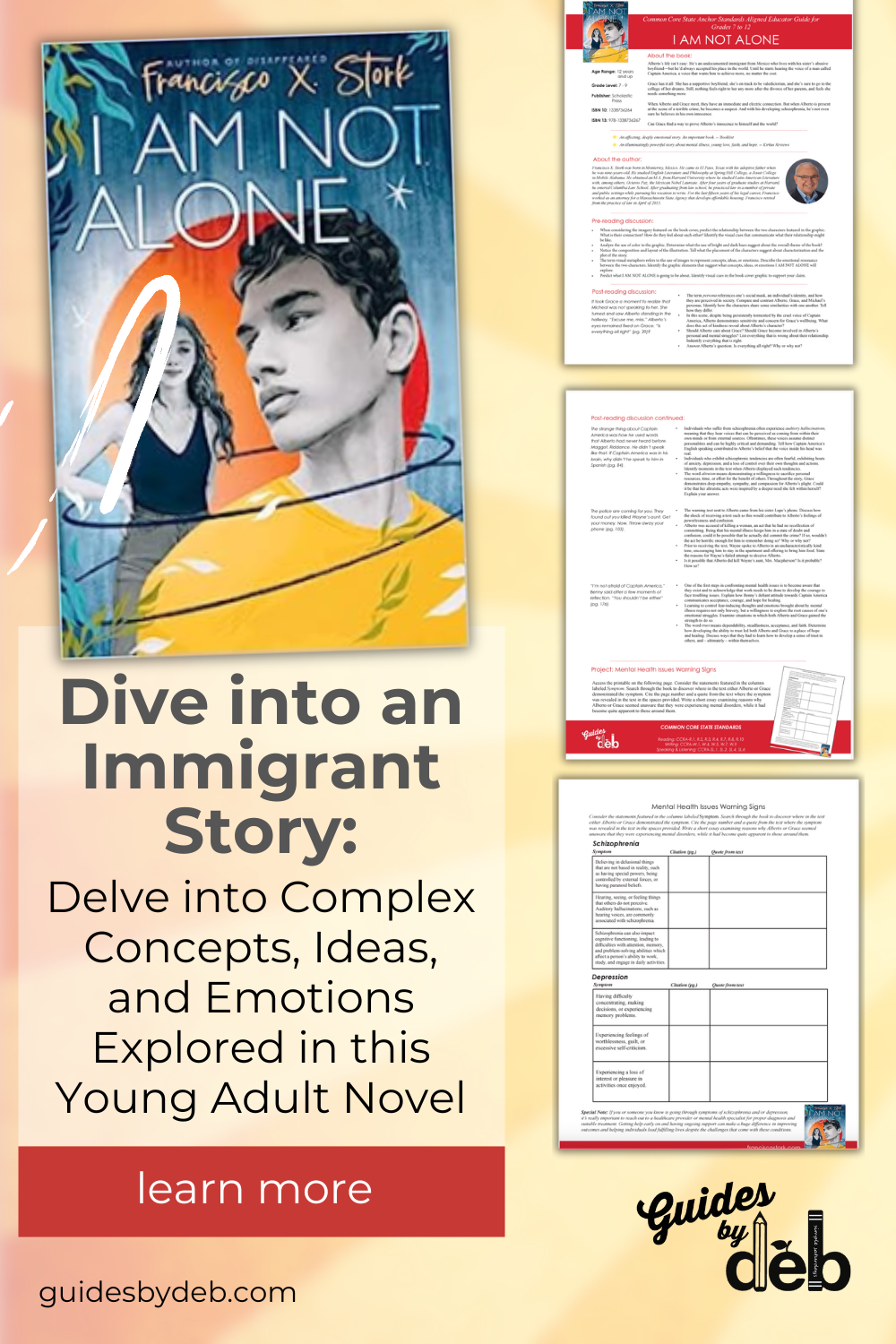
I Am Not Alone offers a powerful, compassionate exploration of identity, mental illness, immigration status, belonging, and hope. Through the intertwined stories of Alberto and Grace, students are invited to examine how internal struggles, societal pressures, and trauma shape adolescent decision-making. The educator guide encourages deep literary analysis while fostering empathy and emotional awareness, asking students to consider persona, perception, trust, altruism, and moral responsibility. By addressing schizophrenia and depression with sensitivity and clarity, the guide helps reduce stigma surrounding mental health and opens space for honest, age-appropriate conversation. Reflection-based questions prompt students to analyze character motivations, recognize warning signs, and understand the importance of compassion, self-awareness, and seeking help — reinforcing the message that no one has to face hardship alone.
-
This guide supports rigorous secondary-level instruction through standards-aligned literary analysis, research-based inquiry, and reflective writing. Students engage in close reading, textual citation, character comparison, thematic exploration, and evidence-based discussion aligned with Common Core State Anchor Standards for Reading, Writing, and Speaking & Listening. A central project focuses on identifying mental health warning signs, requiring students to locate textual evidence, analyze character behavior, and synthesize learning through structured written response. The guide thoughtfully integrates social-emotional learning with academic skill development, making it especially valuable for English Language Arts classrooms, advisory programs, and cross-curricular health and humanities instruction.
-
Designed for grades 7–12 (ages 12 and up), this guide is particularly well suited for middle and early high school students ready to engage in meaningful conversations about mental health, identity, justice, and resilience.