Who Am I? Pandas and Other Bears
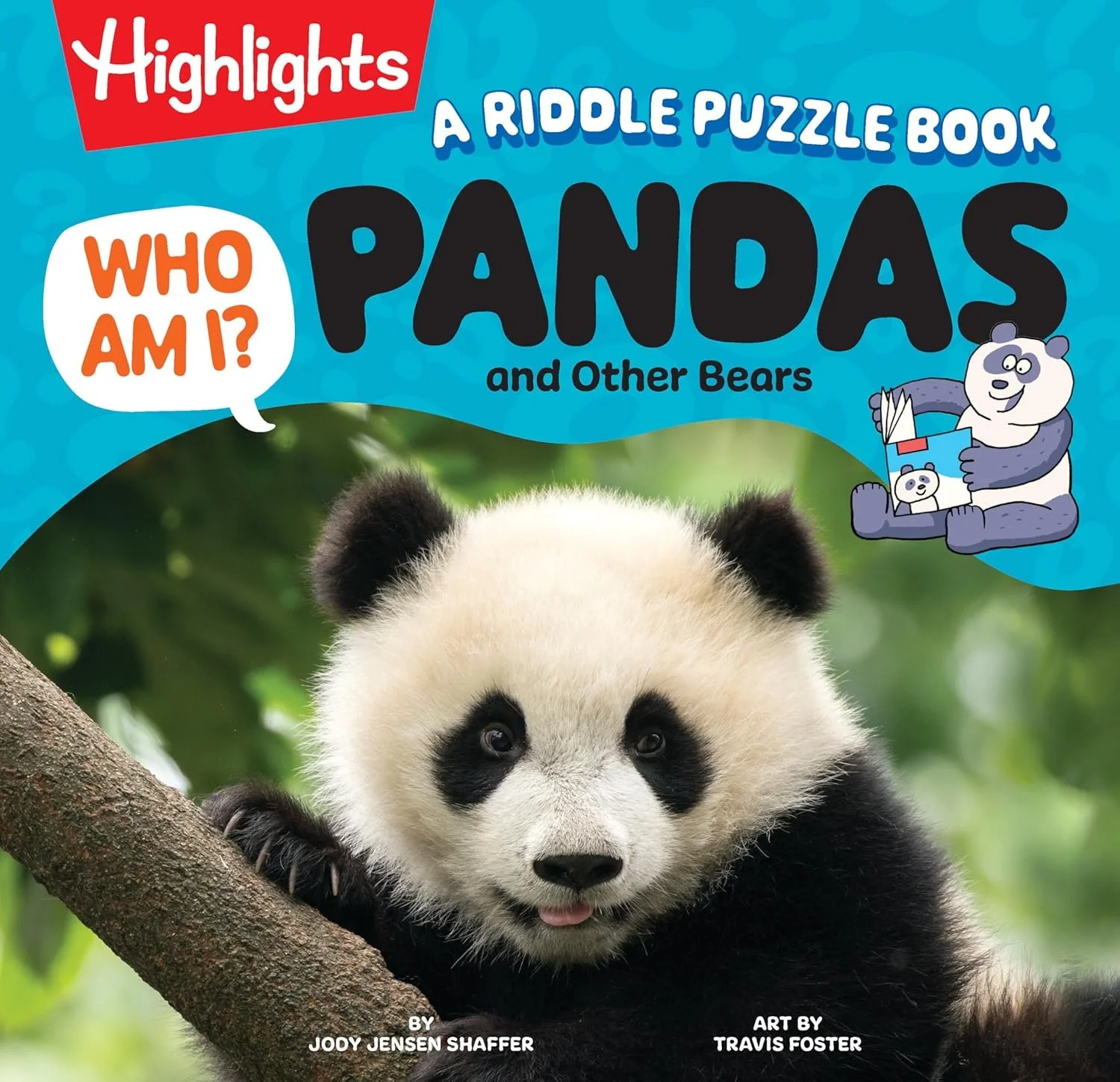
Explore animal adaptations and habitats with this NGSS-aligned bear educator guide featuring riddles, sorting activities, and hands-on science lessons for young learners.
Helping Kids Discover How Animals Survive—and What Makes Them Unique: A Classroom Experience Inspired by Who Am I? Pandas and Other Bears
Have you ever noticed how kids describe animals?
“They’re fluffy.”
“They’re strong.”
“They climb.”
“They eat funny things!”
They notice what stands out.
But they don’t always see why those things matter.
Why the claws are shaped that way.
Why the fur is thick.
Why one animal thrives where another couldn’t.
That’s exactly what Who Am I? Pandas and Other Bears begins to uncover…
…and what this guide helps you bring into focus.
Book Snapshot
Title:Who Am I? Pandas and Other Bears
Author: Jodi Jensen Shaffer
Illustrator: Travis Foster
Publisher: Highlights Press
Age Range: Grades PK–3
Genre: Informational / Riddle-Based Science
Themes: Animal Adaptations, Habitats, Biomes, Inquiry, Observation, Identity
A Book Built on Clues and Discovery
This book invites students to think before they know.
Each riddle offers clues—about what a bear eats, where it lives, and how it survives.
And slowly, students begin to piece it together.
👉 “It lives in the Arctic…”
👉 “It has thick fur…”
👉 “It walks on ice…”
“Oh! A polar bear!”
But what’s really happening isn’t guessing.
It’s reasoning.
It’s connecting ideas.
It’s learning how details tell a story.
Why This Book Matters (Especially in Early Science Learning)
If you’ve ever found yourself:
Trying to teach adaptations in a way that actually sticks
Helping students understand how animals survive in different environments
Looking for ways to connect science, discussion, and hands-on learning
Wanting students to move beyond naming animals → to understanding them
…this book opens that door.
Because it turns facts into clues…
…and clues into understanding.
As the guide emphasizes, students use evidence from the text and images to connect adaptations, habitats, and survival—just like real scientists .
What Students Learn (Without Even Realizing It)
Through this experience, students begin to:
Understand how adaptations help animals survive
Explore different biomes (tundra, forest, grassland, desert)
Recognize how habitats shape animal traits
Compare and classify animals based on features
Use observation and evidence to explain thinking
They begin to see that animals aren’t just different…
They’re designed for where they live.
Bringing the Book to Life in Your Classroom
To extend this learning, I created a Discussion & Project Guide that transforms riddles into real scientific thinking.
Inside, you’ll find:
Scaffolded discussion questions (noticing → connecting → applying → reflecting)
A hands-on Bears & Biomes sorting activity
A Who Am I? clue-based game using adaptations, habitat, and diet
A creative Bear Trait Trading Card project
Printable charts, cards, and visual supports
For example, in the Bears & Biomes lesson, students sort different bears into tundra, forest, grassland, and desert habitats—then connect each bear’s traits to its environment (pages 8–10) .
A Simple Way to Use This in Your Week
Here’s a flexible, meaningful rhythm:
Day 1: Read riddles + introduce key vocabulary (adaptations, habitat)
Day 2: Sort bears into biomes
Day 3: Play “Who Am I?” clue game
Day 4: Create bear trading cards
Day 5: Share + compare + reflect
It’s interactive, structured, and easy to implement.
Standards Alignment
This resource naturally supports:
Common Core State Standards (CCSS):
Discussion and collaborative conversations
Informational text comprehension
Vocabulary development
Next Generation Science Standards (NGSS):
Structure and function (adaptations)
Habitats and survival
Biodiversity and classification
Social-Emotional Learning (SEL):
Recognizing strengths and differences
Building confidence in sharing ideas
Connecting learning to personal identity
The guide intentionally integrates these through discussion, inquiry, and creative expression .
Grab the Discussion & Project Guide
If you’re looking for a way to turn curiosity into meaningful science learning:
👉 Download the Who Am I? Pandas and Other Bears Guide
Want to Add the Book to Your Collection?
👉 Purchase Who Am I? Pandas and Other Bears here
Note: As a member of the Amazon Associate program, I earn from qualifying purchases.
A Final Thought
What I love most about this book…
…is how it helps kids see that every detail has a purpose.
Nothing is random.
Not the claws.
Not the fur.
Not the place an animal calls home.
And once students start to see that…
they begin to ask better questions.
And better questions lead to deeper understanding.
This guide is part of my Guides by Deb collection—standards-aligned resources designed to help educators turn great books into meaningful learning experiences.
I’m Debbie Gonzales, author, educator, and founder of Pin Lit Marketing, where I help children’s book creators grow their visibility through Pinterest.
Together, this work connects books, educators, and readers in lasting ways.