Dear Ms. Guadalupe: Letters to My Librarian
Download a standards-aligned dinosaur and fossils lesson guide with fact vs fiction activities, inquiry-based learning, and science-writing integration for elementary students.
Helping Kids Think Like Scientists (and Storytellers): A Classroom Experience Inspired by Dear Ms. Guadalupe
Have you ever noticed how kids explain the world around them?
They observe something small…
and turn it into something big.
A footprint becomes a dinosaur.
A quiet creek becomes a mystery.
They’re not wrong.
They’re wondering.
And that’s exactly where science begins.
That’s what Dear Ms. Guadalupe captures so beautifully—and what this guide helps you bring to life.
Book Snapshot
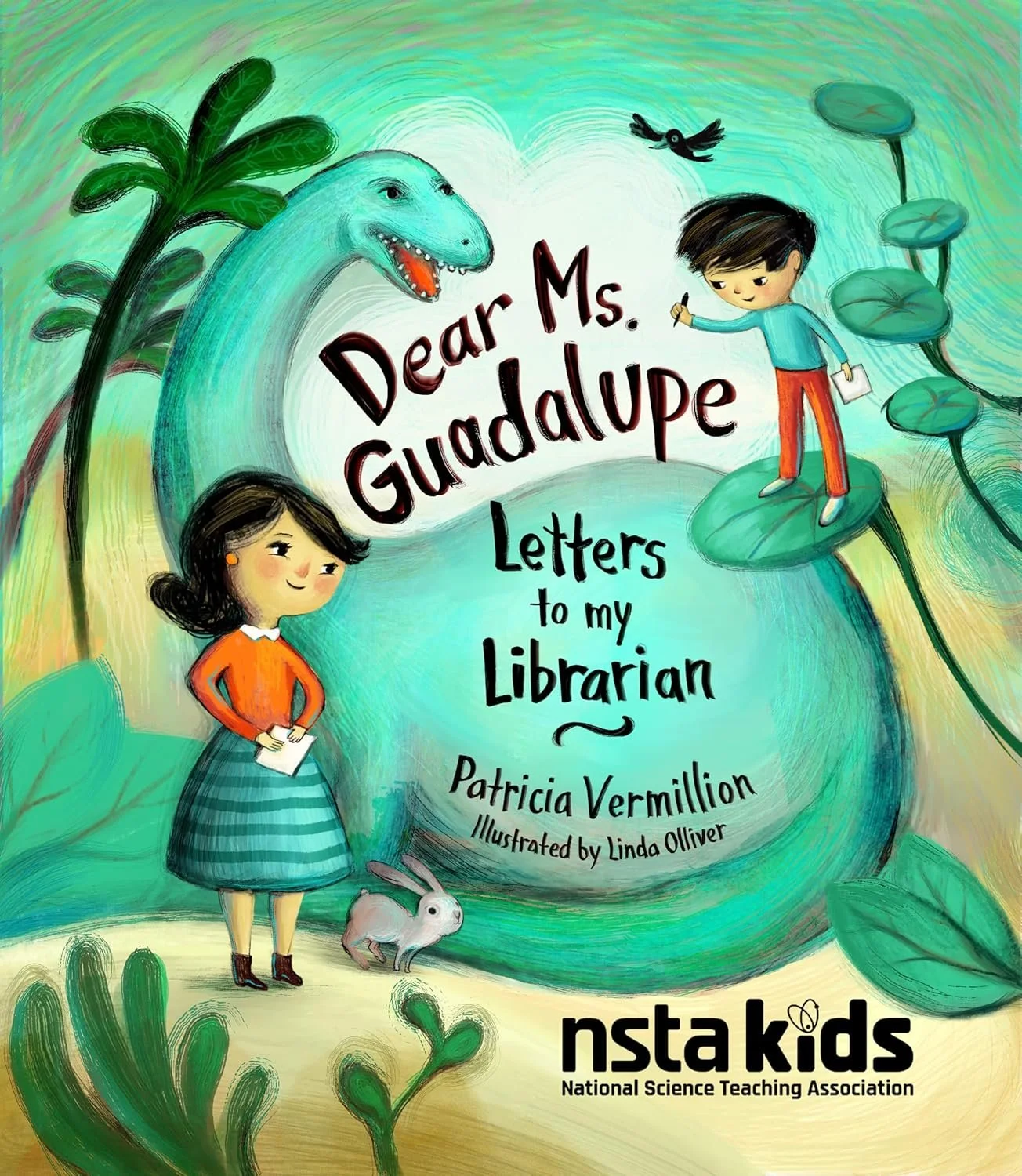
Title:Dear Ms. Guadalupe: Letters to My Librarian
Author: Patricia Vermillion
Illustrator: Linda Olliver
Publisher: NSTA Kids
Age Range: Grades PK–3
Genre: Picture Book / Science + Literacy
Themes: Curiosity, Scientific Inquiry, Fossils, Imagination vs. Evidence, Communication
A Story Built on Curiosity
This story unfolds through letters.
A child writes to his librarian, sharing observations, questions, and discoveries about what he believes might be a dinosaur living near his home.
And through those letters, something powerful happens.
His ideas evolve.
His understanding deepens.
And slowly, gently, he begins to see the difference between:
👉 What we imagine
👉 And what we can prove
It’s not about being wrong.
It’s about learning how to think.
Why This Book Matters (Especially in Early Science Learning)
If you’ve ever found yourself:
Trying to teach the difference between fact and fiction
Helping students understand what “evidence” really means
Looking for ways to connect science and writing
Wanting students to ask better questions—not just give answers
…this book opens that door.
Because it shows students that:
👉 Curiosity is the starting point
👉 But evidence helps us grow
And as the guide reinforces, students begin to read, question, and think like scientists—using both imagination and reasoning together .
What Students Learn (Without Even Realizing It)
Through this story and guide, students begin to:
Understand how fossils help us learn about the past
Explore how Earth and environments change over time
Recognize how animals survive in different habitats
Develop early scientific reasoning and observation skills
Use writing as a tool for thinking and discovery
They begin to see that science isn’t just something in books…
…it’s something happening all around them.
Bringing the Book to Life in Your Classroom
To extend this learning, I created a Discussion & Project Guide that blends science, literacy, and curiosity into one cohesive experience.
Inside, you’ll find:
Scaffolded discussion questions that move from noticing → connecting → reflecting
A “Fact or Fiction” investigation that helps students sort imagination vs. evidence
A timeline exploration of Earth’s prehistoric eras
A creative writing project where students become paleontologists
Hands-on printables and project-based learning tools
For example, in the Fact or Fiction lesson, students analyze Joey’s ideas and sort them into imagination vs. scientific fact—learning to support their thinking with evidence (see Lesson 1, pages 9–11) .
A Simple Way to Use This in Your Week
Here’s a meaningful, manageable flow:
Day 1: Read aloud + discuss curiosity and questions
Day 2: Fact vs. Fiction investigation
Day 3: Explore fossils and Earth’s history
Day 4: Postcard/letter writing as scientists
Day 5: Share discoveries + reflect
It’s hands-on, integrated, and deeply engaging.
Standards Alignment
This resource naturally supports:
Common Core State Standards (CCSS):
Reading comprehension
Narrative and informational writing
Speaking and listening
Next Generation Science Standards (NGSS):
Fossils and evidence of the past
Earth’s changes over time
Earth’s changes over time
Scientific inquiry and reasoning
Social-Emotional Learning (SEL):
Curiosity and persistence
Communication and reflection
Confidence in sharing ideas
The guide intentionally integrates these through discussion, inquiry, and creative expression .
Grab the Discussion & Project Guide
If you want to help students turn curiosity into real understanding:
👉 Download the Dear Ms. Guadalupe Guide
Want to Add the Book to Your Collection?
👉 Purchase Dear Ms. Guadalupe here
Note: As an Amazon Associates I earn from qualifying purchases.
A Final Thought
What I love most about this book…
…is how it honors the way children think.
They don’t separate imagination from learning.
They use imagination to begin learning.
And this story doesn’t shut that down.
It builds on it.
It shows them that wondering is powerful…
…but discovering is even more so.
This guide is part of my Guides by Deb collection—standards-aligned resources designed to help educators turn great books into meaningful learning experiences.
I’m Debbie Gonzales, author, educator, and founder of Pin Lit Marketing, where I help children’s book creators grow their visibility through Pinterest.
Together, this work connects books, educators, and readers in lasting ways.