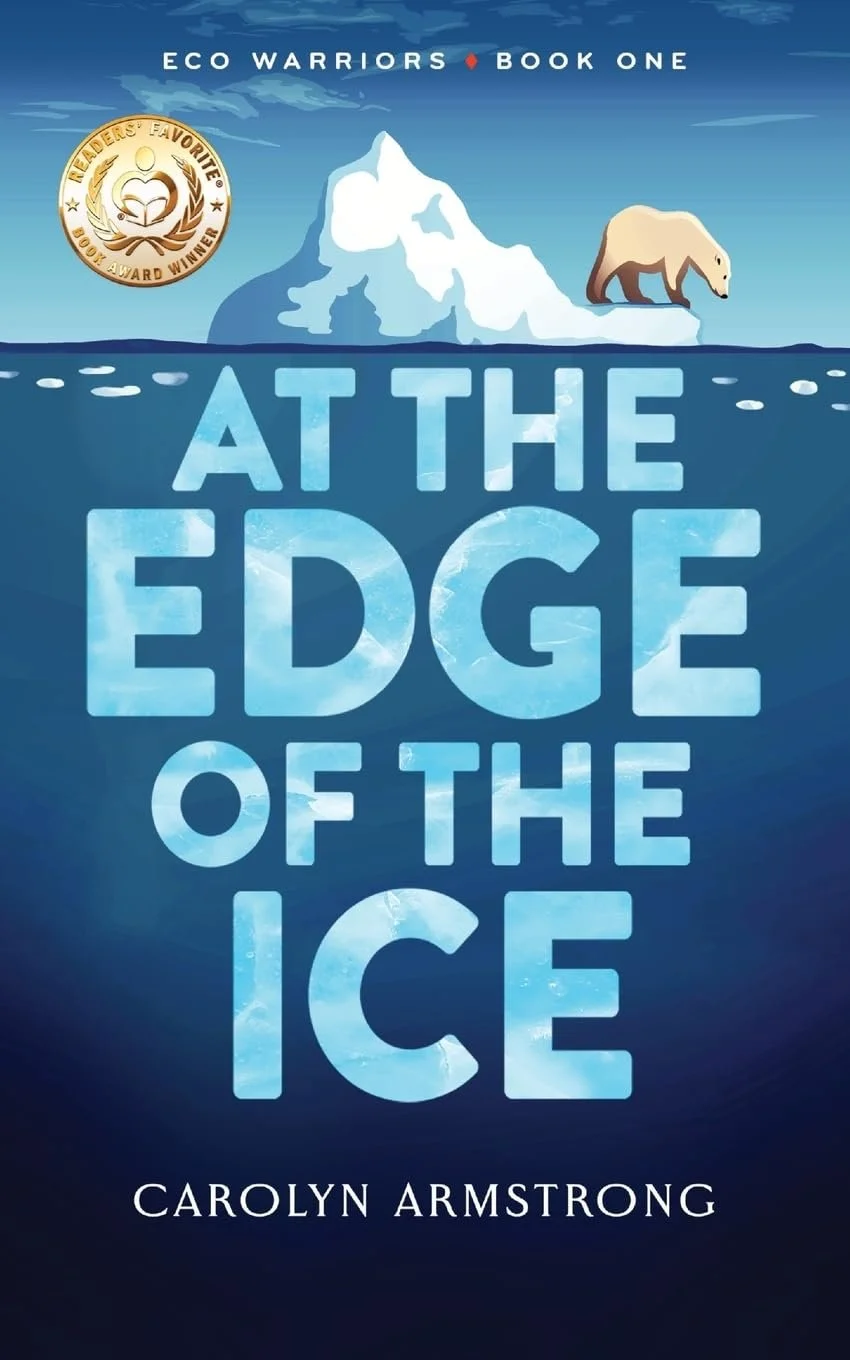
At the Edge of the Ice
Looking for a powerful way to teach ecosystems, climate change, and environmental responsibility?
This classroom-ready resource inspired by At the Edge of the Ice helps students connect science to real-world impact through story, discussion, and hands-on learning.
Helping Kids Understand Interconnected Ecosystems: A Classroom Experience Inspired by At the Edge of the Ice
Have you ever noticed how kids think about animals?
They love them.
They name them.
They root for them.
But they don’t always understand…
…how deeply those animals depend on one another to survive.
That’s exactly what At the Edge of the Ice invites them to discover.
Book Snapshot
Title: At the Edge of the Ice
Author: Carolyn Armstrong
Publisher: CKABooks
Age Range: 8–12 (Grades 4–6)
Genre: Middle Grade Fiction (Climate-Focused, Eco Adventure)
Themes:
Climate Change
Ecosystems & Interdependence
Environmental Stewardship
Empathy & Advocacy
Collaboration & Problem Solving
Get the Book
Grab your copy of At the Edge of the Ice here!
As an Amazon Associates I earn from qualifying purchases.
A Story That Connects Science to Heart
This story does something powerful.
It takes a big, complex issue—climate change—and makes it personal.
Sydney can suddenly talk to animals.
And what they have to say?
Is urgent.
As highlighted in the educator guide, the Arctic ecosystem is “on the brink of collapse” due to habitat loss and global warming
This isn’t just information.
It’s a call to understand, to feel, and to act.
Why This Book Matters
Students are often introduced to climate change as a concept.
But concepts can feel distant.
This book changes that.
Builds understanding of real-world ecosystems
Makes environmental issues tangible and relatable
Encourages empathy for animals and habitats
Bridges science + literacy in meaningful ways
What Students Will Learn
How Arctic food chains function (producer → apex predator)
The role of keystone species
The impact of climate change on ecosystems
The power of collaboration and teamwork
How individual actions can support environmental change
What the Guide Includes
👉 Download the full educator guide here
Inside this standards-aligned resource, you’ll find:
Pre-reading discussion prompts
Post-reading comprehension + analysis questions
Arctic ecosystem & food web exploration
Eco Warrior Food Pyramid activity
Writing extension (science + argument writing)
Cross-curricular connections (ELA + NGSS)
Standout Activity: Eco Warrior Arctic Food Pyramid
This hands-on activity brings the ecosystem to life.
Students explore:
Krill (producer)
Arctic cod (primary consumer)
Seal (secondary consumer)
Polar bear (apex predator)
Then apply their understanding through writing and analysis, explaining how these species function together within a fragile ecosystem
Visual learning
Science integration
Critical thinking
Writing connection
Key Concept: Interdependence
Everything is connected.
From krill to polar bears…
From animals to humans…
From choices to consequences…
Students begin to understand that when one part of an ecosystem is affected, everything else feels it.
Simple 5-Day Classroom Flow
Day 1:
Build background knowledge of Arctic ecosystems
Day 2:
Read and explore character perspectives
Day 3:
Introduce food webs + begin pyramid activity
Day 4:
Complete activity + draft written response
Day 5:
Discuss solutions + reflect on Eco Warrior mindset
Standards Alignment
CCSS:
Reading: R.1, R.2, R.3, R.4
Writing: W.2, W.4, W.9
NGSS:
3-LS4-2
MS-LS2 Ecosystems
SEL Connections:
Empathy
Social awareness
Responsible decision-making
Bring This Learning to Life
This isn’t just a story students read.
It’s a story they experience.
This guide is part of my Guides by Deb collection—standards-aligned resources designed to help educators turn great books into meaningful learning experiences.
I’m Debbie Gonzales, author, educator, and founder of Pin Lit Marketing, where I help children’s book creators grow their visibility through Pinterest.
Together, this work connects books, educators, and readers in lasting ways.