Putting the Deep Green into Evergreen: Organic Marketing on Pinterest
Have you ever noticed how easy it is to feel like you’re constantly “feeding” Pinterest?
Posting…
Scheduling…
Trying to keep up…
And yet—somehow—it can still feel like nothing is really taking root.
That’s because organic Pinterest strategy isn’t about keeping the machine running.
It’s about growing something that lasts.
Organic Doesn’t Mean “Extra”—It Means “Rooted”
Let’s consider what “organic posting” actually means.
It’s not:
leftover content
filler between campaigns
or something you do when you’re not running ads
Organic content is your foundation.
It’s the body of work that:
builds trust
earns saves
shows up in search
and continues working long after you’ve created it
If paid content is the sunlight…
Organic content is the soil.
Give Every Idea a Home
Here’s where everything begins to shift.
Most creators think in terms of posts.
Sometimes we call them assets—printables, guides, downloads, deliverables.
And yes… those matter.
But what we’re really working with on Pinterest goes deeper than that.
We’re working with ideas that serve people.
the feeling behind your story, program, or service
the lesson tucked inside your content
the question your reader is quietly asking
the problem a teacher is trying to solve
That’s the deep green.
That’s the value.
Take a moment and consider what you already have:
a quote from your book
a lesson idea
a blog post
a printable
a theme or message
a reader pain point
a classroom activity
a free download
Each one of these holds meaning.
Each one has the potential to meet someone at the exact moment they need it—
whenever that moment arrives.
But only if it’s been given a place to grow.
Pinterest is where you place those ideas with purpose—so they can be found, saved, and revisited.
The Deep Green Approach
Not all content grows the same way.
Some content is fresh and timely.
Other content?
That’s where your long-term strength lives.
Let’s think of your platform like a landscape made up of layers of green.
Light Green (Fresh Growth)
This is your newest content:
a recent blog post
a new book launch
a seasonal promotion
a current event tie-in
t’s vibrant. It matters. It draws attention.
It’s fresh—and still taking root.
And this is where Pinterest separates itself from traditional social media.
On most platforms, content fades quickly.
On Pinterest, it can take root.
Deep Green (Evergreen Strength)
This is the content that anchors everything.
core themes from your work
emotional takeaways
educator-friendly insights
repeatable lessons
foundational topics like friendship, resilience, identity
This content doesn’t expire.
It compounds.
It’s what allows someone to find you today… from something you created months—or even years—ago.
What Organic Posting Looks Like (in Practice)
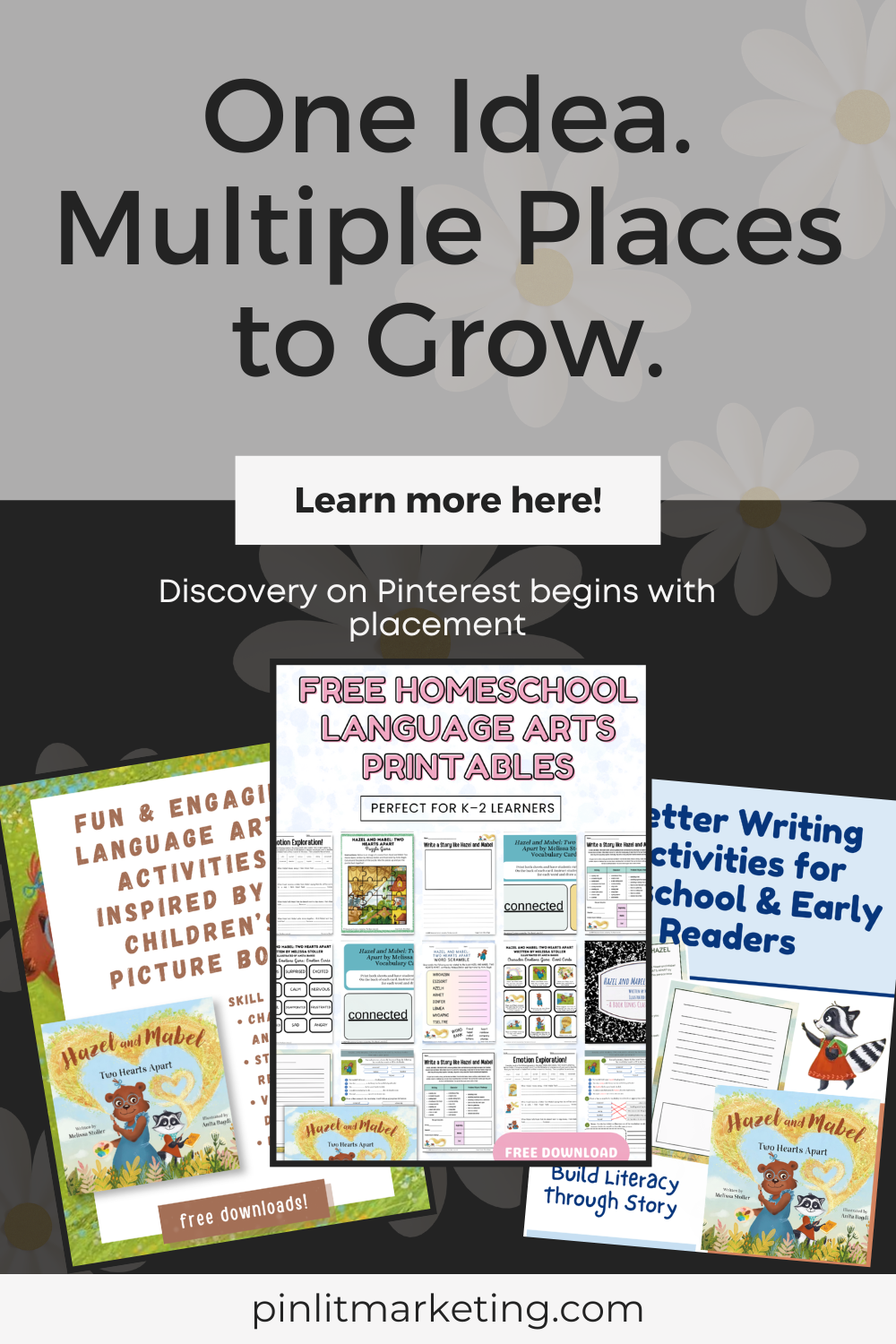
Here’s what this looks like in practice—using Melissa Stoller’s HAZEL AND MABEL , published by Gnome Road Publishing as inspiration.
A tender story of friendship, distance, and the quiet ways love stays connected, HAZEL AND MABEL offers gentle, heartfelt moments that naturally lend themselves to meaningful, shareable content.

Pin concepts inspired by HAZEL AND MABEL by Melissa Stoller. Graphic created for Gnome Road Publishing presentation. Shared here with gratitude.
Instead of creating one pin and moving on…
You create multiple paths back to the same idea.
One piece of content can become:
A free resource pin (coloring pages, printables)
A theme-based pin (plot, message, emotional takeaway)
A pain point pin (what your reader is struggling with)
A quote pin (voice + tone from your work)
A lesson pin (specific, classroom-ready application)
A listicle pin (save-worthy, searchable content)
A target audience pin (clearly calling in your people)
This is how your content becomes discoverable.
Not louder.
Just… more available.
And while this example is rooted in one beautiful book…
this approach works for any story, any program, any body of work that holds meaning.
If it carries depth—
it can grow.
Why This Works (Especially on Pinterest)
Pinterest isn’t a social feed.
It’s a search engine.
Which means it isn’t asking:
“What’s new?”
It’s asking:
“What’s useful?”
And even more importantly:
“Can I show this to someone who needs it right now?”
And this is where your titles matter more than you might think.
The pins you’re seeing here weren’t titled at random.
They were built from high-ranking, searchable terms—
with clear attention to:
keywords
audience
and intent
In other words…
They’re designed to meet people where they’re already looking.
When your content is rooted in real value—
and expressed in multiple ways, using the language your audience is actively searching—
…it gives Pinterest more opportunities to say:
“Yes. This belongs here.”
This is where thoughtful content meets thoughtful language—and where discoverability begins.
A Gentle Shift in Perspective
If Pinterest has ever felt overwhelming, try this small shift:
Instead of thinking:
“I need to post more…”
Think:
“I need to plant more thoughtfully.”
Because thoughtful planting leads to:
stronger saves
better indexing
longer visibility
and a platform that supports you over time
Closing Thought
Organic Pinterest strategy isn’t about chasing attention.
It’s about building presence.
The kind that:
grows quietly
serves consistently
and reaches the right people at the right time
That’s the deep green.
That’s evergreen.
And that’s where your work begins to live far beyond the moment you created it.