The World That Feeds Us
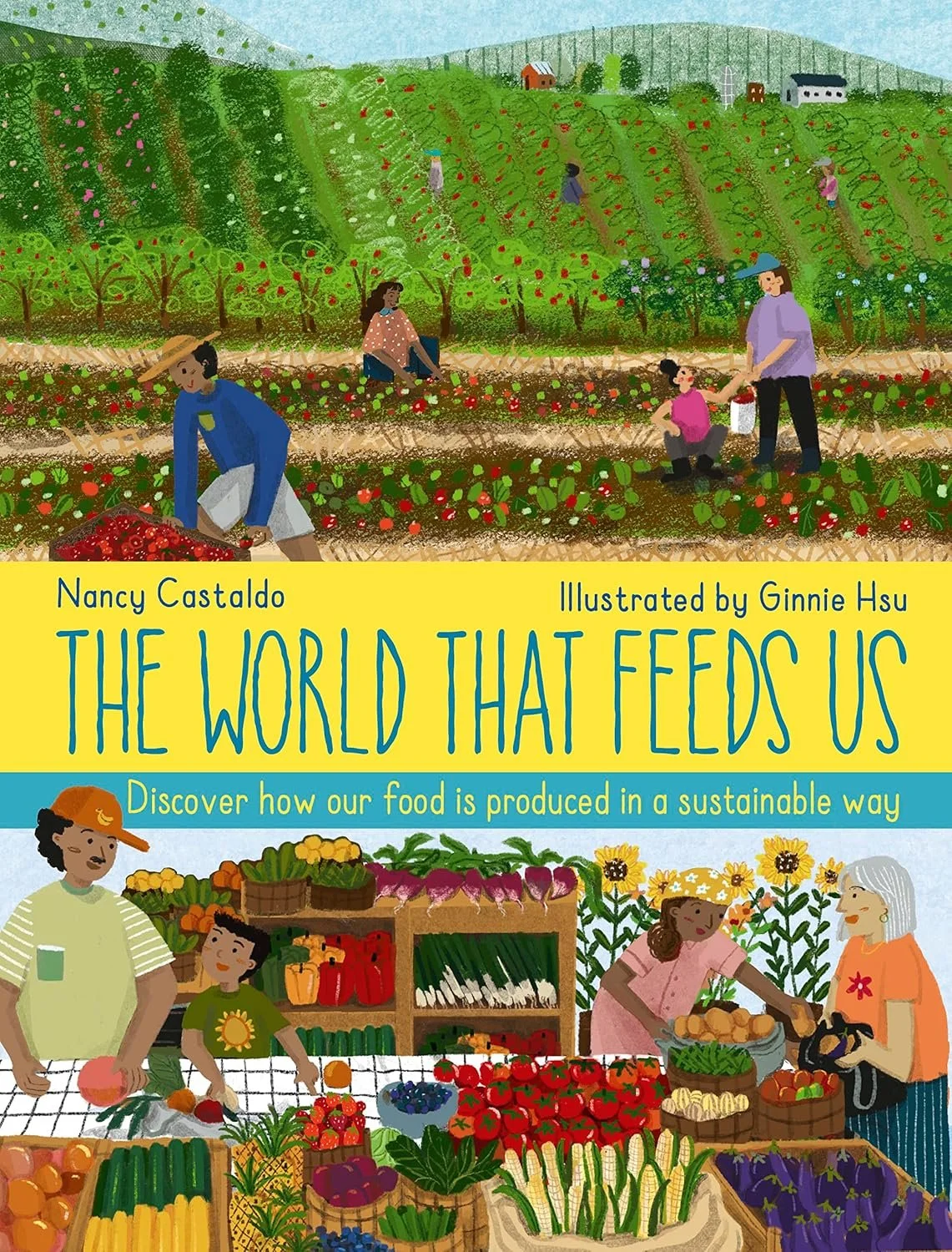
Help students discover where their food comes from with The World That Feeds Us—a powerful nonfiction book exploring global farming, sustainability, and environmental responsibility. Connect science to real life. Explore global food systems. Build environmental awareness. Inspire responsible choices. Perfect for elementary STEM lessons, Earth Day, and NGSS-aligned classrooms.
Helping Students Understand Where Their Food Comes From: A Classroom Experience Inspired by The World That Feeds Us
Have you ever noticed how kids think about food?
It comes from the store.
From a package.
From a shelf.
But not always…
from the soil.
From farmers.
From the Earth itself.
That’s exactly what The World That Feeds Us helps students uncover.
Book Snapshot
Title: The World That Feeds Us
Author: Nancy Castaldo
Illustrator: Ginnie Hsu
Publisher: words & pictures
Age Range: 7–11
Grade Level: 2–6
Genre: Informational Nonfiction / STEM
Themes:
Sustainable farming
Global food systems
Climate and agriculture
Environmental responsibility
Science + real-world application
A Book That Connects Kids to the Planet
This book does something powerful.
It takes something every child experiences every day—food—and traces it back to its source.
Students explore:
Farms around the world
Seasonal growing cycles
Sustainable practices
The relationship between climate and food
As noted in the guide, the book follows farming practices “from Hawaii, to Sweden, the UK, and beyond” to show how food is grown sustainably across the globe .
👉 It makes the invisible…visible.
Why This Book Matters (Teacher Pain Points)
Perfect for classrooms where:
Students struggle to connect science to real life
Environmental topics feel abstract
Teachers want meaningful NGSS-aligned content
Food systems and sustainability need clearer context
Engagement increases with global, real-world examples
What Students Will Learn
Where food truly comes from
How climate impacts agriculture
What “sustainable” really means
How farmers adapt to environmental challenges
How personal choices impact the planet
What’s Inside This Educator Guide
This guide is rich with science and inquiry:
Pre-reading questions connecting food to daily life
Deep discussions on sustainability and climate
Exploration of agroecology and environmental impact
Geography connections through global farming examples
Writing, research, and discussion extensions
Strong alignment to CCSS + NGSS standards
Standout Activity: The Eco-Pyramid 🌍
Students:
Summarize complex ideas in structured layers
Work with vocabulary like sustainability, biodiversity, and climate
Build toward a written explanation of their learning
From the guide:
1 word: type of farming for future generations
2 words: key environmental gas
3 words: green energy
4 words: urban farming
5 words: biodiversity
6 words: choices to protect the planet
👉 It’s concise, creative, and deeply conceptual.
A Powerful Throughline: We Are Part of the System
One of the most important takeaways:
👉 Farmers feed us.
👉 The Earth sustains us.
👉 And our choices matter.
As the guide reminds us, even if we don’t work on farms, we can still “make choices that keep us healthy” and protect the planet .
That’s agency.
That’s empowerment.
Try This in Your Classroom
NGSS-aligned science units
Earth Day and environmental studies
Farm-to-table explorations
Geography + climate lessons
STEM + literacy integration
Download the Free Educator Guide
Ready to connect your students to the world that feeds them?
👉 Download the full educator guide here: A Standards-Aligned Educator Guide for Grades 2 – 6
About the Book Link (Transparency Note 💛)
If you’d like to explore or purchase The World That Feeds Us, you can use the link below:
This is an affiliate link, which means I may earn a small commission (at no extra cost to you). These earnings help support the creation of free Guides by Deb resources for teachers and classrooms.
This guide is part of my Guides by Deb collection—standards-aligned resources designed to help educators turn great books into meaningful learning experiences.
I’m Debbie Gonzales, author, educator, and founder of Pin Lit Marketing, where I help children’s book creators grow their visibility through Pinterest.
Together, this work connects books, educators, and readers in lasting ways.